High Pressure Drain Jetting: How It Works and When Your Drain Needs It
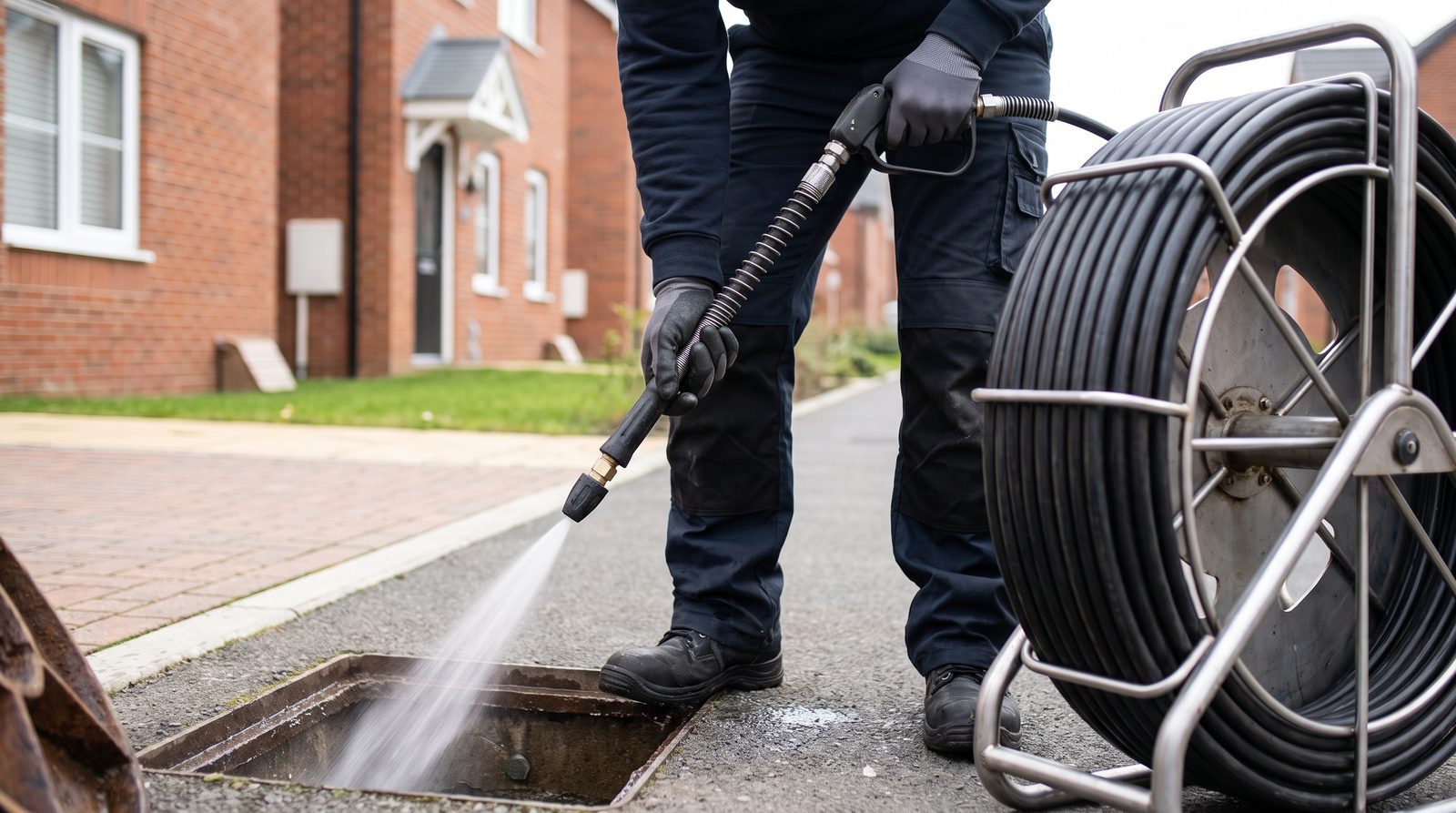
If a drain keeps backing up no matter how many times it gets rodded, the pipe usually is not actually clear. Rodding punches a hole through a blockage. Jetting cleans the pipe. That difference is why high pressure drain jetting has become the standard first response for stubborn blockages in homes and on commercial sites across the South of England.
Here is what jetting actually involves, what it can and cannot fix, and how to tell whether your drain needs it.
What high pressure drain jetting is
A jetting unit pumps water down a flexible hose at pressures of several thousand PSI. The nozzle on the end fires jets backwards as well as forwards, so it pulls itself along the pipe while scouring the walls behind it. The forward jets break up the blockage. The rear jets drag the debris back towards the manhole where it can be removed.
The result is a pipe cleaned back to its full bore rather than one with a channel poked through the middle of a fat deposit. That is the whole point. A drain that has been jetted properly flows the way it did when it was installed.
What it clears
- Fat, grease and soap build-up, which is the single most common cause of slow kitchen and bathroom drains
- Silt and sand that has settled in a shallow-fall run
- Fine tree roots that have worked in through a joint
- Scale and general encrustation in older clay pipework
- Wet wipes, sanitary items and other debris that has snagged on a defect
What it will not fix
Jetting clears obstructions. It does not repair pipes. If your drain has a collapsed section, a displaced joint, a crack or a heavy root mass growing through a break, the jet will clear the immediate blockage but the fault will keep catching debris. That is why a blockage that comes back within weeks is a red flag.
Is jetting safe for older pipes?
Used properly, yes. Pressure and nozzle choice are matched to the pipe material and condition. Old clay, pitch fibre and thin-walled plastic all need a lighter touch than a modern commercial main. This is where experience matters more than the size of the machine. An engineer who winds the pressure up regardless of what is in the ground can turn a hairline crack into a hole.
If we suspect a pipe is fragile, we will say so before we start and recommend a camera inspection first.
Why jetting and CCTV go together
The most useful thing about jetting is not the clearance itself. It is what you can see afterwards. Once the pipe walls are clean, a camera can show the true condition of the drain: joints, bedding, root entry points, cracks and any low spots holding water.
Running a CCTV drain survey straight after jetting is how you find out whether you have solved the problem or simply bought yourself a few months. On a repeat blockage we almost always do both on the same visit, because the second call-out costs you more than the camera does.
Signs your drain needs jetting rather than rodding
- The same drain blocks two or three times a year
- Water drains away but noticeably slower than it used to
- Gurgling from a toilet or sink when another appliance empties
- A smell around a gully or manhole even when nothing is backed up
- A commercial kitchen drain that has never been on a maintenance schedule
That last one is worth flagging. Kitchens produce grease constantly. A planned jetting visit every six or twelve months costs a fraction of an emergency shutdown during service.
What it costs and how long it takes
Most domestic jetting jobs are done inside a couple of hours. Pricing depends on access, the length of the run and how bad the build-up is, and it varies with the job rather than being a fixed rate everywhere. What should never vary is that you get a fixed price before anyone starts work.
We do not charge a call-out fee, so the quote you agree is the amount you pay. If we open the manhole and find the real problem is structural rather than a blockage, we tell you that before we run the hose.
Getting it sorted
A drain that keeps blocking is telling you something. Clearing it again and again without ever looking inside the pipe is the expensive way to deal with it.
If you have a slow or repeat-blocking drain anywhere in Dorset, Hampshire or Wiltshire, call Total Drainage on 0333 004 7002 or send us a photo on WhatsApp and we will tell you what we think is going on. You can also see the full range of work we handle on our drainage services page, or request a callback and we will ring you straight back. No call-out fee, free fixed quotes, and a 5% discount for NHS, OAP and military customers.